What to Ask and Look for When Visiting a Glutathione Factory
A factory visit is one of the most useful qualification activities a raw material buyer can do — and one of the most frequently done badly. Without a clear framework for what to look for, a tour can turn into a polished presentation that confirms nothing except that the facility has a clean reception area and a slide deck prepared for buyers. Knowing what to ask and where to look changes a visit from a courtesy call into a genuine qualification exercise.
This applies to glutathione specifically because the gap between what suppliers represent on paper and what they can actually deliver is unusually wide in this market. The active pharmaceutical ingredient market for glutathione has a concentration of genuine large-scale manufacturers, a larger number of mid-tier operations, and a significant number of trading companies that represent themselves as manufacturers. A visit conducted without specific technical intent often fails to distinguish between these categories.
Before the visit: document requests that shape what you’ll see
The most informative factory visits start before you walk through the door, with document requests that tell you something about the facility’s capabilities and force the host to prepare materials that reveal their actual quality level.
Request the facility’s current GMP certification — the certificate, not a screenshot of the certificate — and verify the certificate number with the issuing authority if possible. GMP certificates from NMPA (China’s National Medical Products Administration), WHO PIC/S member authorities, or EU GMP are the meaningful ones for pharmaceutical-grade material. Supplement GMP certifications from NSF, BRCGS, or ISO 22000 indicate quality management discipline but a lower regulatory threshold.
Request the current DMF (Drug Master File) filing number if the facility claims to supply pharmaceutical manufacturers in regulated markets. US FDA DMF filings are publicly searchable; having a DMF number that actually appears in the FDA database is a strong signal of genuine pharmaceutical supply capability.
Request a recent batch record for glutathione, redacted for proprietary information but showing the process steps, in-process controls, yield, and disposition decision. Facilities that actually manufacture glutathione at scale will have batch records as a routine document. Facilities that trade in glutathione purchased from other manufacturers won’t have them.
Production area: what to observe
When you reach the production floor, the physical setup should match what the facility claims about its process.
For fermentation-derived glutathione, you should see fermentation vessels (bioreactors), downstream processing equipment for extraction and purification (chromatography columns, filtration systems, concentration equipment), and a drying step (typically spray drying or lyophilization). The scale of these should be consistent with the production volumes the supplier claims. A facility that says it produces 50 tonnes per year should have fermentation capacity visible to you — not a single pilot-scale fermenter.
For chemically synthesized glutathione, the production equipment looks different — reaction vessels, a different set of purification equipment — but the principle is the same: what you see should be capable of producing the volumes being claimed at the specification being marketed.
Ask specifically about the purification steps and what they remove. The answer tells you whether the person walking you through actually understands the process or is giving a scripted tour.
Cleanroom classification and environmental monitoring matter for pharmaceutical-grade material. For API (active pharmaceutical ingredient) or pharmaceutical excipient production, there should be environmental monitoring data — particle counts, microbial testing of surfaces and air — available for the production areas. Ask to see recent environmental monitoring summary data. Facilities that have it will produce it readily; facilities that don’t will deflect.
Quality control laboratory
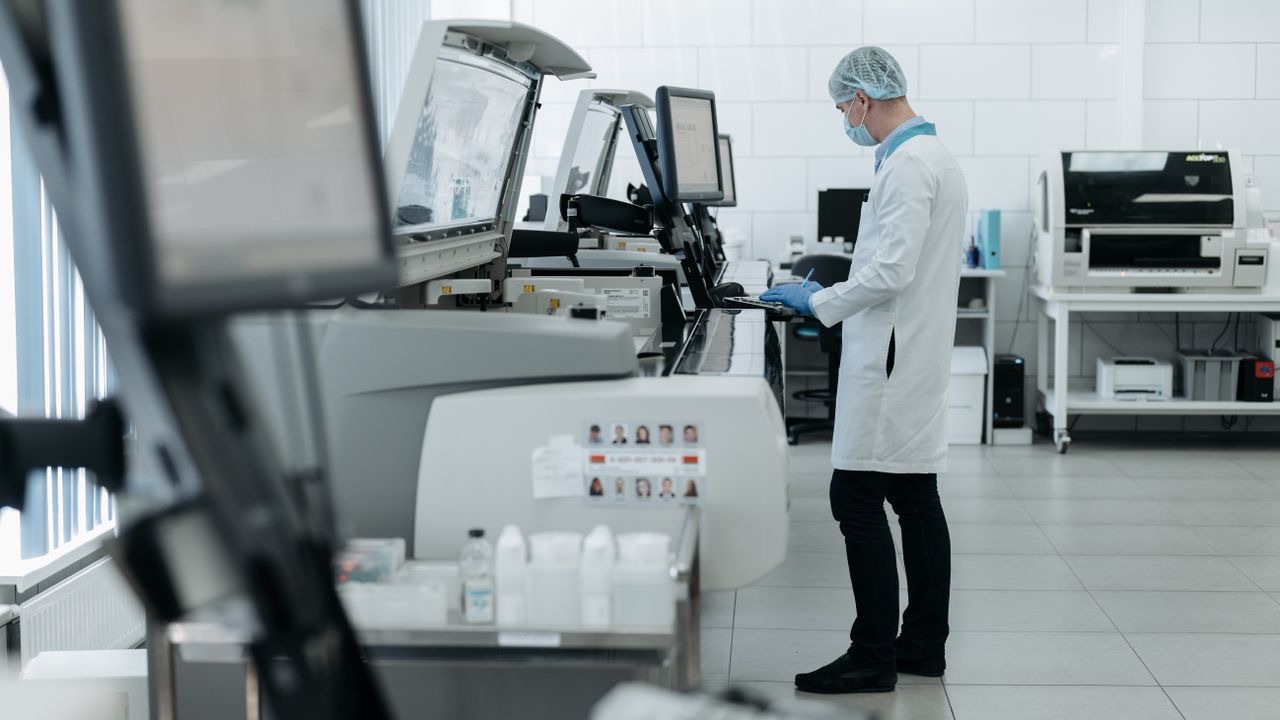
The QC laboratory visit is often more informative than the production floor, because the equipment present reveals what testing the facility actually performs in-house versus what it sends out.
For HPLC-based purity testing, look for HPLC instruments and ask what columns and methods are used for glutathione purity analysis. Ask whether the methods are validated to pharmacopeia standards (USP, EP) or to in-house methods. Validated pharmacopeia methods with documented system suitability testing are a higher standard than proprietary in-house methods.
For heavy metals testing, the facility should have either ICP-MS (inductively coupled plasma mass spectrometry), ICP-OES, or atomic absorption spectroscopy. These instruments are recognizable and expensive; a laboratory that claims to test heavy metals but doesn’t have the equipment for it is sending samples to an external laboratory or not testing at all. Neither of those is inherently disqualifying, but the answer should match what you’re seeing.
Ask to see a complete certificate of analysis for a recent glutathione batch and follow the test results back to the raw instrument data. Not all instruments, but at least one test parameter. The ability and willingness to show you the underlying data — not just the CoA document — is a meaningful signal of documentation integrity.
Retained samples and stability program
Legitimate glutathione factory operations maintain retained samples for every batch produced, stored under controlled conditions, for the duration of the shelf life plus one year. Retained samples exist so that if a quality issue surfaces after release, the original batch material can be retested.
Ask to see the retained sample storage area. It should be organized by lot number, with temperature and humidity monitoring, and the samples should actually correspond to lot numbers that appear in the batch records you’ve reviewed.
Ask about the stability program: does the facility put samples from each batch on formal stability study (testing at defined time points under controlled conditions to verify shelf life)? For a claimed 24-month shelf life, there should be data from accelerated stability studies (ICH Q1A conditions) and ongoing real-time stability data at least through the longest time points completed. A facility that claims a 24-month shelf life without stability data to support it is assigning shelf life arbitrarily.
The trading company tell
The clearest signal that you’re visiting a trading company rather than a manufacturer comes when the tour avoids the production area with explanations about it being “under maintenance,” “in production for another customer,” or “not accessible today.” Legitimate manufacturers manage buyer visits around production schedules regularly; they don’t routinely close their production floors to buyers.
Other signals: inability to answer specific technical questions about the production process, batch records that show purchased raw material but no in-house manufacturing steps, logistical addresses that don’t match the physical location you’re visiting, and staff who deflect technical questions to a “technical team” that isn’t present.
None of these is individually conclusive, but patterns of deflection across multiple areas of the visit — production, QC, documentation — are more diagnostic than any single data point.
After the visit: follow-up that closes the picture
A visit checklist that isn’t followed up with document verification leaves gaps. After the visit, request the batch records and CoAs you discussed on-site in final form, any corrective action reports from recent internal or external audits, and a list of reference customers who have conducted supplier audits of the facility and who you could contact as a reference.
The willingness to provide references — and the references’ willingness to respond — is one of the stronger final verification points for a facility that presents well during a visit. Facilities that have genuinely been through customer qualification audits have customers who’ve been through the process; those customers exist and can be contacted.